Ohio Truck Accident Help
A Division of Ohio Truck Accident
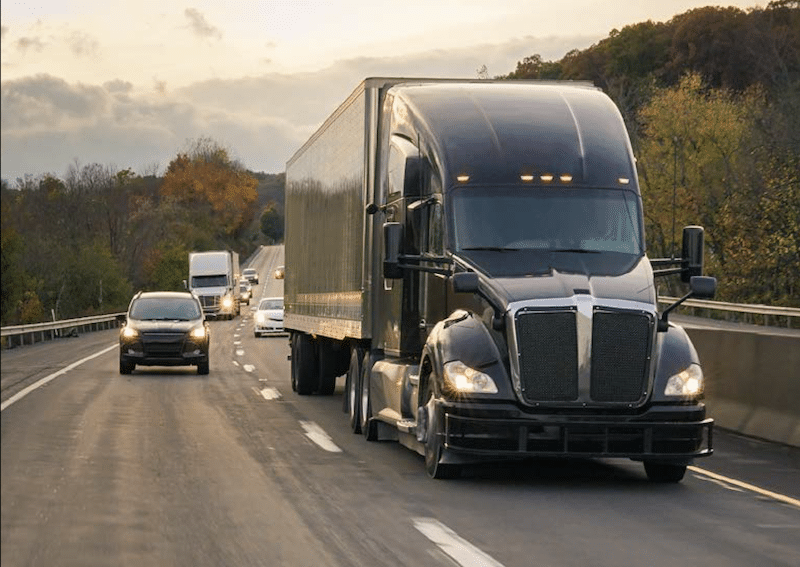
A data-driven look at commercial trucking, crash trends, and the evolving risks on Ohio’s roadways.
Commercial trucking is central to Ohio’s economy, moving goods across one of the busiest freight networks in the country. However, more trucks on the roads means a higher likelihood of more dangerous crashes for everyday drivers. A fully loaded semi-truck can weigh up to 80,000 pounds, while the average passenger car weighs closer to 3,000 pounds. Pending federal legislation could raise the weight ceiling further, making the roads even more of a threat to drivers.
Ohio has become a testing ground for automated trucks. Partially, automated tractor trailers have been operating on I-70 between Columbus and Indianapolis since April 2025 under the state pilot program. As these technologies become more prevalent on Ohio roads, liability in crashes involving autonomous trucks remains an evolving area of law, specifically when determining responsibility among the vehicle operator, technology providers, manufacturer, and other parties. Meanwhile, many of the state’s counties continue to experience thousands of crashes involving commercial vehicles every year.
The Ohio State Highway Patrol does not publish a separate count for large trucks, but it tracks commercial-related crashes, a broader category that includes semi-tractors alongside school buses, transit and charter buses, commercial vans, single-unit trucks over 10,000 pounds, and any vehicle carrying a hazardous material placard.

According to the NHTSA, in 42.4 percent of two-vehicle fatal crashes involving a large truck, both the truck and the other vehicle were driving straight. Large trucks were struck at the front in 59.9 percent of two-vehicle fatal crashes. A loaded semi needs substantially more distance to stop than the car in front of it.
In Montgomery County on I-75 in November 2025, a driver of a Ford cargo van was struck by a semi in the right lane after the semi did not keep a safe distance and hit the van from behind. The driver of the van died as a result of the crash. The semi driver was charged with vehicular homicide and vehicular manslaughter. I-75 north closed for several hours.
For vehicles traveling on the interstate system, Ohio limits commercial vehicles to 80,000 pounds gross weight, with a maximum of 20,000 pounds on a single axle and 34,000 pounds on a tandem axle.
The BUILD America 250 Act includes an amendment establishing a voluntary pilot program that would let individual states raise the maximum gross vehicle weight on federal interstates from 80,000 to 91,000 pounds. Trucks operating at the higher weight would be required to carry a sixth axle to distribute the load. States that decline to participate keep the 80,000-pound limit, which means Ohio would have to opt in for the change to reach its highways.
The bill cleared the House Transportation and Infrastructure Committee in May 2026 and awaits a floor vote.
KNR Managing Partner John Reagan has warned against passing it, noting that heavier trucks require longer stopping distances, reduce maneuverability, and increase the force of a collision, potentially resulting in more severe injuries.
Ohio serves as a testing ground for automated trucks. Partially automated tractor-trailers have been hauling freight on I-70 between Columbus and Indianapolis since April 2025. The $8.8 million project is partly funded by a U.S. Department of Transportation grant and run by the Ohio Department of Transportation and its DriveOhio initiative together with the Indiana Department of Transportation, with EASE Logistics operating the trucks and Kratos Defense supplying the technology.
The technology is truck platooning rather than driverless operation. Two tractor-trailers travel in tandem, and the lead truck’s driver electronically controls the follower, which can steer, accelerate and brake on portions of the route. Professional drivers remain in both cabs throughout the drive. The automated trucks are specifically in Ohio to be tested in windy and snow-covered environments, potentially putting Ohio drivers at risk.
Ohio currently governs automated vehicle testing through executive order and the DriveOhio framework rather than a dedicated statute.
Stay out of the no-zones: A tractor-trailer has blind spots directly in front of the cab, along both sides, and roughly 30 feet behind the trailer. The right side is the largest. If you cannot see the driver’s face in their side mirror, they cannot see you.
Give trucks room to stop: A loaded semi traveling at highway speed needs roughly 40% more distance to stop than a passenger car. Cutting in front of one and braking removes the cushion the driver has been maintaining. Leave at least four seconds of following distance behind a truck, and more in rain or snow.
Plan lane changes early, especially on Ohio’s freight corridors: I-270, I-71, I-75, I-90, I-480, and I-77 carry heavy truck volume through interchanges with short merge distances. Move to your exit lane well ahead of the ramp rather than crossing lanes at the last moment.
Record the drive: As KNR Founding Partner Rob Nestico told WTOL11, Ohio drivers should install a dashcam. A motorist’s own footage is often the only independent account of the seconds before impact.
A commercial truck crash can leave you dealing with serious injuries, vehicle damage, insurance claims and questions about what happened. If you’ve been involved in a truck accident in Ohio:
