Ohio Truck Accident Help
A Division of Ohio Truck Accident
Evidence is critical in truck accidents, so it's essential to secure the scene after a crash. Learn how to protect your insurance claim by following this guide after a crash.
The first moments after a truck accident can be a chaotic swirl of emotions. Unfortunately, evidence doesn’t last forever, and securing the crash scene is essential to building a strong legal case. If you’ve been in a truck accident, call Ohio Truck Accident Help for a consultation and get help protecting time-sensitive evidence.
You can take immediate steps to collect evidence after a truck accident. Once you’ve ensured the safety of yourself and your passengers, you have an opportunity to take photographs, interview witnesses, and document any details that could help prove fault.
Skid marks disappear over time, witnesses can be lost forever, and evidence like broken tie straps can be missed and later covered up. Trucking companies often dispatch investigators within hours to protect their interests. Don’t miss your best chance at building a strong case. Read on to learn what to look for immediately after an accident.
The moments immediately following a truck crash are crucial for safety and your legal case. While your first priority should be ensuring safety and getting medical help, specific steps will secure the scene and preserve evidence.
Your first priority is always your own safety. Before documenting anything, make sure you and passengers are safe. If possible, move to a safe location away from traffic. Turn on your hazard lights and set up warning triangles or flares if you have them available.
Call 911 as soon as you can. Even if your injuries seem minor, emergency responders create an official accident report and ensure proper injury documentation.
Eyewitnesses disappear quickly, and you may need to act fast to catch them before they leave the scene. While their memories are fresh, approach anyone who saw the crash and ask for a statement. Record their full names, phone numbers, and addresses. Your lawyer will be able to contact them in the future.
Take note of any nearby businesses with surveillance cameras. Surveillance footage is often only kept for short periods of time, sometimes only 24 hours. Approach these sources quickly before recordings are deleted and ask them to save you a copy.
Here’s one that nobody misses: exchange contact and insurance information with the driver. When you do, keep the conversation purely factual. Obtain the driver’s name, phone number, commercial driver’s license number, and insurance information. Note the trucking company’s name and DOT number from the cab.
Don’t discuss fault or apologize. These statements can be used against you. If the driver mentions being tired, distracted, or having equipment problems, write it down immediately.
Once you’ve completed 1-3, begin documenting the scene with your phone. Take photos from multiple angles. Get wide shots showing the entire scene and close-ups of specific details.
Key items to photograph include:
Photograph the truck’s cargo area if possible. Improperly loaded cargo causes many truck accidents. Always document:
Certain evidence at truck accident scenes is time-sensitive. For example, skid marks fade within hours and can wash away in the rain. Make sure you find and photograph them. Skid marks from truck accidents may begin dozens of feet before the site of the accident, so look carefully.
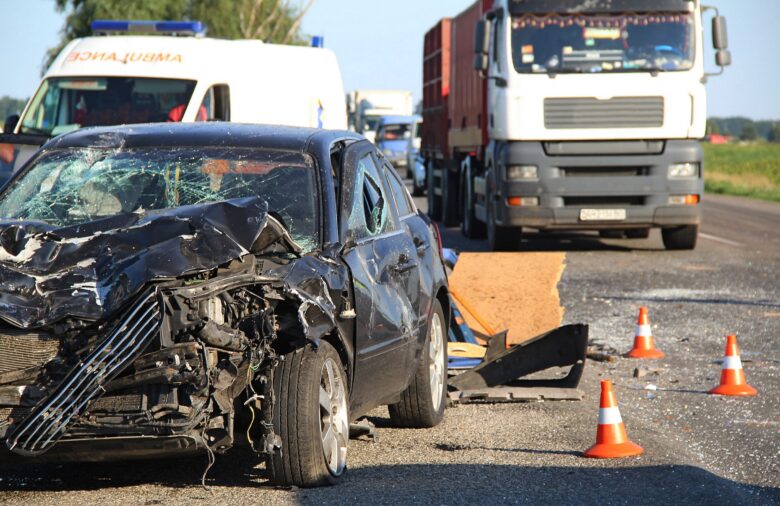
Photograph the exact positions of all vehicles involved in the accident before they’re moved. Use fixed landmarks in your photos to help demonstrate distances. You can even take measurements if you’re equipped to do so.
Photograph mechanical debris like broken parts, leaked fluids, or separated components. This type of debris can indicate mechanical failure or poor maintenance. Get photo evidence of where pieces landed relative to vehicles. Landing patterns can be used by experts to determine exactly what happened.
Truck accident victims often make mistakes that weaken their cases. Don’t let the following errors derail your chance at full compensation.
It’s incredibly common to leave the scene before fully collecting evidence. Once you leave, you lose the opportunity to capture the moments after the accident. Insurance adjusters may later question why you didn’t take more photos.
Stay on the scene until law enforcement completes their investigation unless you need emergency transport.
In the minutes after the accident, you may feel fine, but many truck accident injuries manifest hours or days later. Shock can mask pain from internal bleeding, spinal damage, or brain injuries. Don’t tell investigators that you “feel okay.” Those statements become part of the official record and can work against later injury claims.
Always accept medical evaluation and seek comprehensive examination within 24 hours of the accident. Tell medical professionals about any discomfort you may be experiencing, no matter how minor it may seem. This will create documented evidence linking the accident to your injuries.
It’s normal for the trucking company’s insurance adjusters to contact victims within hours of the accident. They’ll do their best to appear sympathetic but their goal is to minimize liability. They want to record your statement while you’re still in shock.
Anything said in recorded statements can be used against you. Small errors about timing or distances will later be highlighted to discredit your story. If anyone calls asking you to discuss the accident, politely decline until you’ve consulted with an Ohio truck accident lawyer.
Quick settlements benefit trucking companies. By offering modest amounts soon after the accident, they hope to close your case before the full extent of your injuries becomes clear. Many victims accept these early offers out of financial stress, only to later discover medical bills and lost wages that far exceed their settlement amount.
Never accept settlements without consulting a truck accident attorney. Once you accept and sign a release, you give up your right to pursue additional compensation, even if you discover more serious injuries later.
Don’t clean debris or move vehicles. While it may seem helpful to clear the way for other traffic, vehicle positions, debris patterns, and fluid leak locations all provide important clues about the accident.
If vehicles must be moved, make sure you take extensive photos first showing the exact scene immediately after the accident. If it’s possible, you can also mark positions with chalk or note them relative to fixed landmarks.
After serious truck crashes, multiple investigations occur simultaneously. It’s your job to make sure that your evidence is strong enough to counter or support the evidence gathered during these investigations.
After the accident, the Ohio State Highway Patrol or local police will conduct official investigations, create an accident report, document scene conditions, etc. Officers usually photograph the scene, measure skid marks, and diagram positions. They may also issue citations for traffic violations.
If it was a serious accident, the Federal Motor Carrier Safety Administration (FMCSA) may investigate. They will look into whether the trucking company and driver complied with federal safety regulations, including hours-of-service rules and maintenance requirements. They also usually review electronic logging device data, maintenance records, and company safety ratings. If they find any violations, it can substantially strengthen your claim.
Two insurance company investigations will take place. Your insurance and the trucking company will both look into the accident.
Trucking company investigators often arrive quickly, sometimes even before roads are cleared. They will take photos, interview witnesses, and examine the vehicles. It’s their job to minimize liability, and they may pick and choose evidence according to that goal.
When you contact a truck accident lawyer, your lawyer can hire independent experts to analyze the crash using physics and engineering principles. These experts may calculate speeds, determine sight lines, and analyze whether the driver had adequate time to stop.
Although your lawyer will do their best to support your claim, these experts rely heavily on the physical evidence preserved at the scene. Your initial documentation can be invaluable for this purpose.
Your first priority is safety. Check for injuries and move to a safe location if possible without leaving the immediate area. Call 911 to report the accident. Turn on hazard lights and set up warning devices if available. Once safety is established and help is on the way, begin documenting the scene with photos and gathering witness information.
Ohio’s statute of limitations for personal injury claims, including truck accidents, is generally two years from the accident date. However, this deadline can vary depending on specific circumstances. It’s crucial to consult with an Ohio truck accident lawyer as soon as possible, as evidence can be lost and witnesses’ memories fade over time.
No. Avoid providing any recorded statement to the trucking company’s insurance adjuster without first consulting with an attorney. Insurance adjusters are trained to elicit statements that minimize the company’s liability. Even innocent statements can be taken out of context. Politely decline and refer them to your attorney once you’ve retained representation.
Take comprehensive photos including all vehicle damage from multiple angles, the overall scene showing vehicle positions, skid marks and debris patterns, road conditions and weather, traffic controls and signage, the truck’s DOT number and company information, any visible injuries, and the cargo area if accessible. Also photograph your vehicle’s interior if airbags deployed. The more photos you take, the better—you can always delete unnecessary ones later but can’t recapture missed evidence.
If your vehicle creates a safety hazard or blocks traffic, you may need to move it. However, before moving anything, take extensive photographs documenting exact positions of all vehicles and any physical evidence like skid marks or debris. If possible, wait for law enforcement to arrive and direct vehicle movement. Their accident report will include measurements and diagrams of original positions.
Several types of evidence are time-sensitive. Skid marks can fade or be washed away by weather. Debris can be cleared by highway crews or blown away by traffic. Witnesses may leave and be difficult to locate later. Security camera footage from nearby businesses is often recorded over after a few days or weeks. The truck’s electronic logging device data can potentially be altered if not preserved through legal action quickly. This is why immediate evidence preservation and prompt legal consultation are so important.
While not legally required, consulting with an Ohio truck accident lawyer as soon as possible provides significant advantages. An experienced attorney can immediately begin preserving evidence, including sending spoliation letters to prevent the trucking company from destroying crucial data. They handle communication with insurance companies, protect you from making damaging statements, and ensure filing deadlines are met. Most truck accident attorneys offer free consultations and work on contingency fees—you pay nothing unless they recover compensation.
Don’t worry if you couldn’t document everything. You may have been too injured, in shock, or circumstances may have prevented thorough documentation. An experienced truck accident lawyer can still build a strong case using other sources of evidence including the police accident report, testimony from responding officers and witnesses, surveillance footage from nearby businesses, the truck’s electronic logging device and black box data, the trucking company’s maintenance and safety records, and expert accident reconstruction analysis.
A skilled truck accident attorney takes immediate action to preserve crucial evidence. They send spoliation letters to the trucking company and other parties, legally requiring them to preserve all evidence including electronic data, maintenance records, driver logs, and communications. They can subpoena the truck’s black box data before it’s overwritten, obtain the driver’s qualification files, secure the company’s safety records, hire accident reconstruction experts to analyze the scene, and interview witnesses while memories are fresh.
Beyond photographing damage, document the truck’s DOT number prominently displayed on the cab, the trucking company name and contact information, the truck’s license plate number, the trailer number if different from the cab, and the Vehicle Identification Number if accessible. Also note any visible maintenance issues like worn tires, damaged lights, or fluid leaks. The DOT number allows investigators to access the company’s safety record, inspection history, and past violations through the FMCSA database, which can reveal patterns of negligence.
If you’ve been in a truck accident, we’re here to help. Our legal team has extensive experience handling truck accident cases throughout Ohio and is experienced in evidence collection. Don’t wait to start building your case. Contact Ohio Truck Accident Help today for a free consultation.